Performed by Dr. Sriharsha Gurram at Dr Sriharsha Gurram
A kidney biopsy in Bengaluru is a diagnostic procedure where a small sample of kidney tissue is extracted for microscopic examination to diagnose various kidney disorders. This percutaneous procedure helps identify conditions like glomerulonephritis, unexplained kidney dysfunction, proteinuria, and transplant rejection. Dr Sriharsha Gurram performs kidney biopsies using advanced imaging guidance to ensure precision and patient safety.
We believe in honest, upfront disclosure so you can make an informed decision.
A step-by-step look at what happens during this procedure.
Complete medical evaluation including blood pressure check, coagulation studies, complete blood count, and imaging to identify kidney position and rule out contraindications.
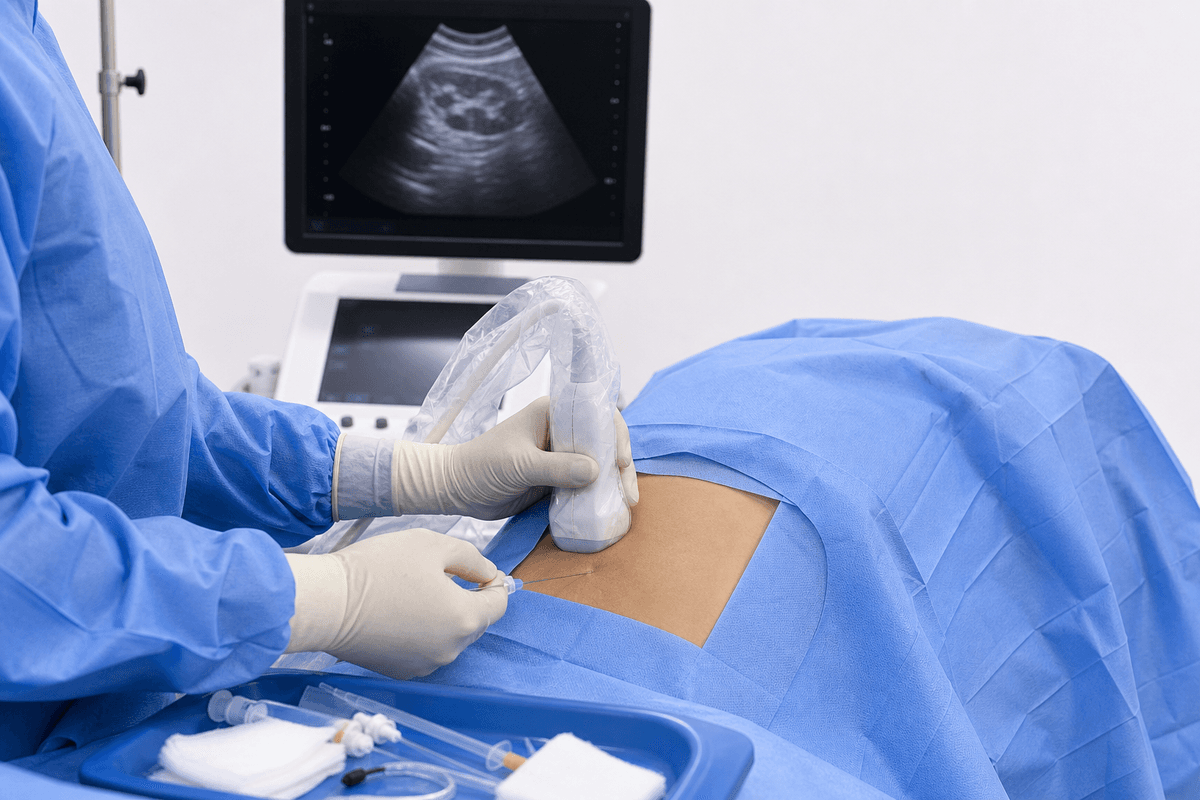
Patient lies prone or on their side. The biopsy site is identified using ultrasound imaging. The area is cleaned with antiseptic solution and draped in sterile fashion.
Local anaesthetic is injected into the skin, subcutaneous tissue, and kidney capsule to numb the area and ensure patient comfort during the procedure.
Under real-time ultrasound or CT guidance, a spring-loaded biopsy needle is advanced into the kidney cortex. Typically 2-3 tissue cores are obtained for adequate histological examination.
Pressure is applied to the biopsy site. Patient is placed on bed rest for 4-6 hours with vital signs monitored regularly. Urine is checked for blood and imaging may be performed to rule out complications.
A structured, patient-first approach from first consultation to full recovery.
Dr Sriharsha Gurram uses real-time ultrasound guidance to precisely locate the kidney and select the optimal biopsy site, minimizing risk to blood vessels and ensuring adequate tissue sampling.
Comprehensive pre-procedure counseling is provided to address patient concerns. Dr Gurram ensures patients understand the procedure, its necessity, and what to expect during recovery.
Using spring-loaded automated biopsy needles and careful technique, Dr Gurram obtains adequate tissue samples while minimizing trauma to kidney tissue and surrounding structures.
Close post-procedure monitoring includes serial vital signs, hematocrit checks, and imaging if needed. Dr Gurram personally reviews pathology results and discusses findings with patients to guide treatment planning.
What to expect at each stage of your recovery journey.
Strict bed rest for 4-6 hours followed by limited mobility. Vital signs monitored every 15-30 minutes initially. Blood in urine is common. Pain managed with medications. Avoid strenuous activities.
Gradual return to light activities. Avoid heavy lifting, contact sports, and strenuous exercise. Blood in urine should resolve within 48-72 hours. Monitor for persistent bleeding, fever, or severe pain.
Resume normal activities gradually as advised by Dr Gurram. Follow-up appointment to discuss pathology results and treatment plan. Full recovery typically achieved within 2 weeks with no long-term restrictions.
Kidney biopsy provides accurate histological diagnosis in over 95% of cases, identifying specific glomerular diseases, interstitial nephritis, vasculitis, or transplant rejection that cannot be diagnosed through non-invasive tests.
Precise pathological diagnosis allows Dr Gurram to tailor immunosuppressive therapy, adjust medications, and implement specific treatment protocols based on the exact kidney disease identified.
Biopsy findings provide valuable information about disease severity, chronicity, and potential for recovery, helping predict long-term kidney function and guide management strategies.
For transplant recipients, kidney biopsy accurately detects rejection episodes, recurrent diseases, or medication toxicity, enabling timely interventions to preserve graft function.
Let's clear up some of the most common myths about kidney biopsy.
Get a personalised assessment from an experienced specialist. Understand your options, ask your questions, and decide with confidence.
Consult Sriharsha Gurram for Kidney Biopsy at any of these 2 centres — pick the one nearest you.