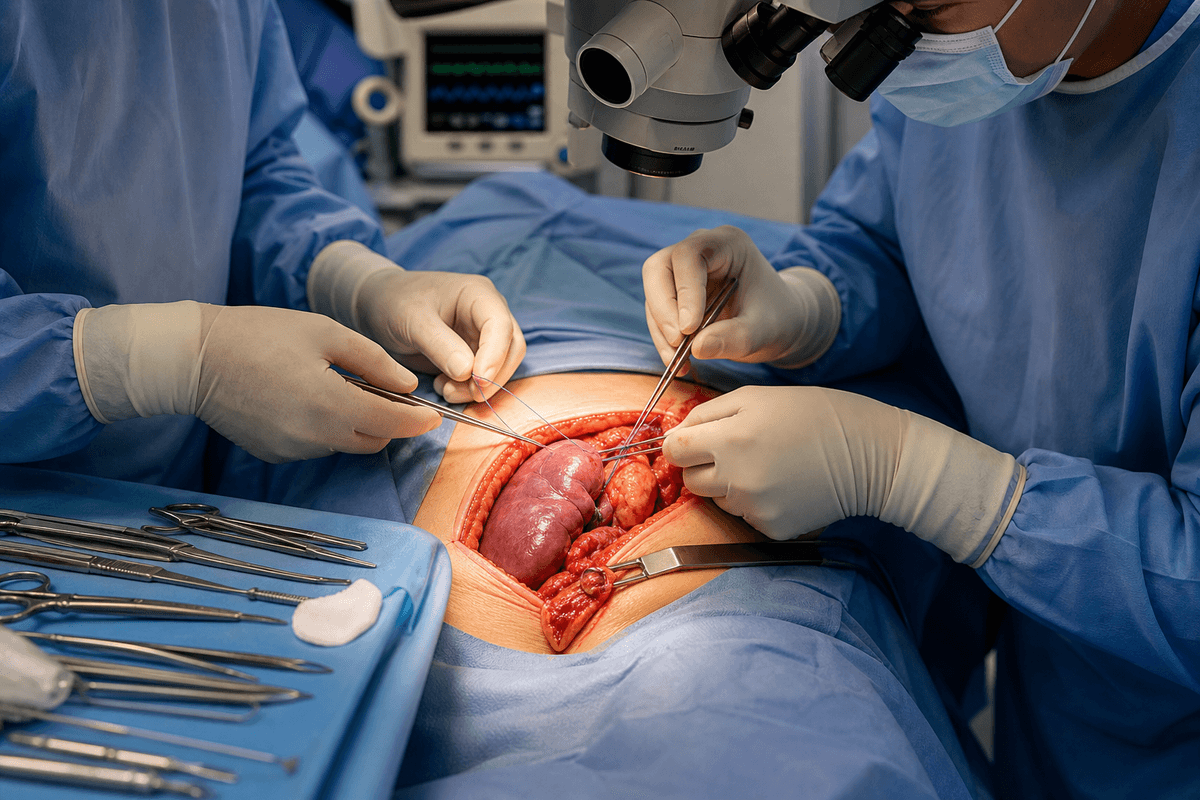
Performed by Dr. Sriharsha Gurram at Dr Sriharsha Gurram
Kidney Transplantation in Bengaluru is a life-saving surgical procedure that replaces a failed kidney with a healthy donor kidney, restoring normal kidney function for patients with end-stage renal disease. This complex procedure requires careful donor-recipient matching, advanced surgical expertise, and comprehensive post-operative management to ensure optimal graft survival and patient outcomes. Dr Sriharsha Gurram provides expert nephrology care throughout the transplant journey, from pre-transplant evaluation to long-term follow-up.
We believe in honest, upfront disclosure so you can make an informed decision.
A step-by-step look at what happens during this procedure.
The donor kidney is evaluated for compatibility through blood type matching, tissue typing (HLA matching), and cross-matching to minimize rejection risk. Living or deceased donor kidneys undergo rigorous quality assessment.
The recipient undergoes pre-operative assessment including cardiac evaluation, infection screening, and optimization of medical conditions. Immunosuppressive medication protocols are planned.
Under general anaesthesia, an incision is made in the lower abdomen. The donor kidney is placed in the iliac fossa, and the renal artery and vein are connected to the recipient's iliac vessels.
The donor ureter is connected to the recipient's bladder to allow urine drainage. The native failed kidneys are typically left in place unless there are specific medical reasons for removal.
The patient is monitored closely for graft function, urine output, and potential complications. Immunosuppressive medications are initiated immediately to prevent rejection.
A structured, patient-first approach from first consultation to full recovery.
Dr Sriharsha Gurram conducts comprehensive pre-transplant assessment including detailed medical history, laboratory workup, immunological testing, and counseling to ensure patient readiness and optimize outcomes.
Dr Gurram collaborates closely with the transplant surgical team to ensure seamless perioperative care, managing nephrology aspects of the procedure including fluid balance, electrolyte management, and early graft function monitoring.
Dr Sriharsha Gurram provides expert post-transplant nephrology care including immunosuppression management, monitoring for rejection episodes, managing complications, and adjusting medications based on graft function and patient response.
Dr Gurram ensures comprehensive long-term follow-up with regular monitoring of kidney function, immunosuppression levels, screening for complications, and managing comorbidities to maximize graft survival and patient quality of life.
What to expect at each stage of your recovery journey.
The first 5-7 days involve hospital monitoring with close attention to graft function, urine output, vital signs, and potential complications. Pain management and early mobilization are initiated. Immunosuppressive medications begin immediately.
Weeks 2-12 involve frequent outpatient visits for blood tests, medication adjustments, and monitoring for rejection. Patients gradually resume light activities while avoiding heavy lifting. Strict medication adherence and infection prevention are critical.
After 3-6 months, patients typically return to normal activities with ongoing immunosuppression. Lifelong follow-up includes regular kidney function tests, immunosuppression monitoring, screening for complications, and management of cardiovascular risk factors to ensure optimal graft longevity.
Successful kidney transplantation eliminates the need for dialysis, providing significant improvement in quality of life, energy levels, dietary freedom, and daily schedule flexibility compared to the constraints of regular dialysis treatments.
Kidney transplantation offers superior long-term survival compared to remaining on dialysis, with studies showing significantly reduced mortality risk and better cardiovascular outcomes in transplant recipients versus dialysis patients.
Patients experience substantial improvements in physical functioning, mental health, employment capacity, and overall well-being. The restoration of normal kidney function allows for better management of comorbidities and reduced medication burden.
With proper immunosuppression and medical management, many transplanted kidneys function well for 10-20 years or longer. Living donor transplants typically show superior outcomes compared to deceased donor grafts with higher long-term survival rates.
Let's clear up some of the most common myths about kidney transplantation.
Get a personalised assessment from an experienced specialist. Understand your options, ask your questions, and decide with confidence.
Consult Sriharsha Gurram for Kidney Transplantation at any of these 2 centres — pick the one nearest you.