Performed by Dr. Sriharsha Gurram at Dr Sriharsha Gurram
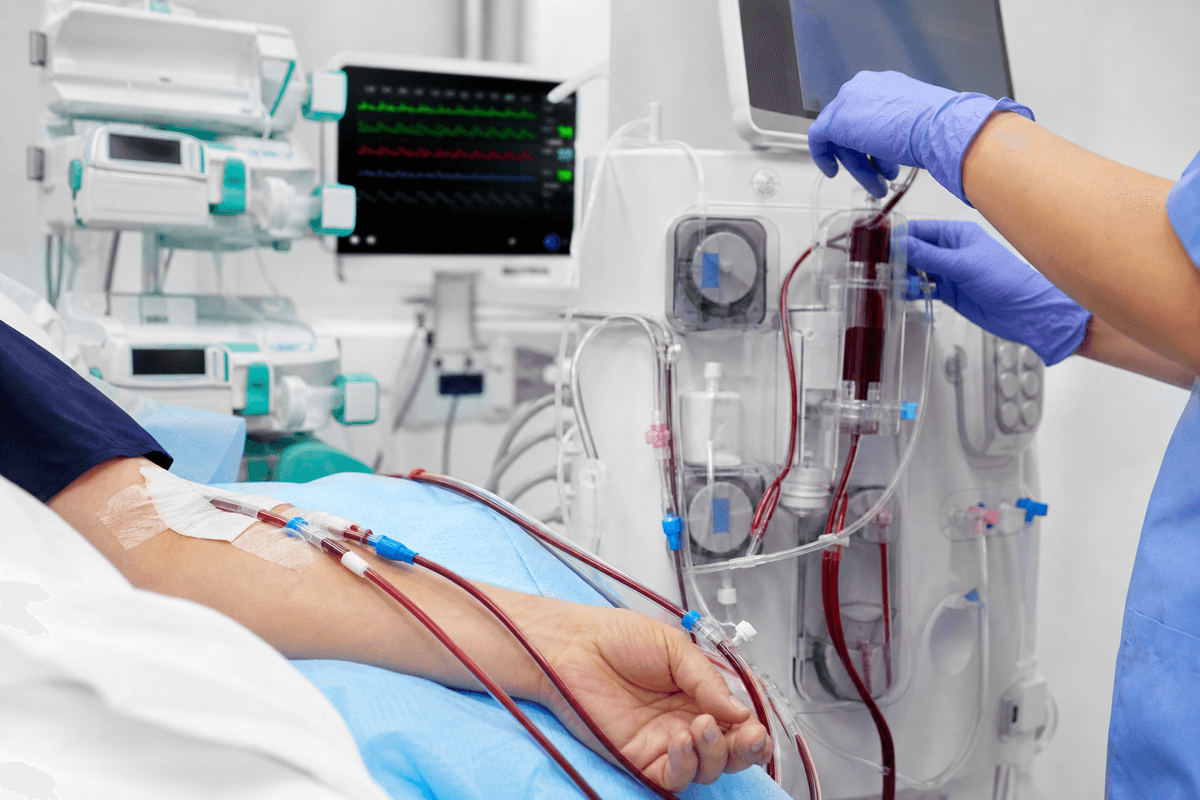
Continuous Renal Replacement Therapy (CRRT) in Bengaluru is an advanced, round-the-clock dialysis technique used for critically ill patients with acute kidney injury or multi-organ failure. This gentle, continuous filtration method removes toxins and excess fluids while maintaining hemodynamic stability. Dr Sriharsha Gurram provides expert CRRT management with state-of-the-art technology and intensive monitoring.
We believe in honest, upfront disclosure so you can make an informed decision.
A step-by-step look at what happens during this procedure.
A large-bore central venous catheter is inserted into a major vein, typically the internal jugular, subclavian, or femoral vein, to establish access for blood flow to and from the CRRT machine.
Blood is continuously withdrawn from the patient through one catheter lumen, pumped through the CRRT circuit at controlled rates of 100-200 mL/min, ensuring gentle and steady filtration without hemodynamic stress.
Blood passes through a hemofilter containing a semipermeable membrane that removes excess fluid, toxins, electrolytes, and waste products through convection, diffusion, or a combination of both processes.
Sterile replacement fluid is infused to maintain fluid balance and electrolyte composition, while anticoagulation (typically citrate or heparin) prevents clotting within the circuit to ensure continuous operation.
The cleansed blood is continuously returned to the patient through the second catheter lumen, completing the circuit while maintaining stable blood pressure and organ perfusion throughout the treatment period.
A structured, patient-first approach from first consultation to full recovery.
Dr Sriharsha Gurram conducts thorough evaluation of kidney function, hemodynamic status, fluid balance, and coagulation parameters to determine CRRT necessity and customize treatment parameters for each critically ill patient.
Customized CRRT prescription including modality selection (CVVH, CVVHD, or CVVHDF), blood flow rates, dialysate/replacement fluid composition, ultrafiltration goals, and anticoagulation strategy based on individual patient physiology and treatment objectives.
Continuous ICU-level monitoring of treatment efficacy, circuit patency, electrolyte balance, acid-base status, and hemodynamic parameters with real-time adjustments to optimize kidney support while preventing complications throughout the therapy duration.
Collaborative management with intensivists, providing seamless coordination of CRRT with ventilator support, vasopressor therapy, nutrition, and other critical care interventions to support overall patient recovery and multi-organ function restoration.
What to expect at each stage of your recovery journey.
Patient remains in ICU with continuous monitoring while CRRT runs 24/7. Gradual improvement in kidney function markers, fluid balance, and metabolic parameters is monitored through regular blood tests and clinical assessments.
As kidney function recovers and hemodynamic stability improves, CRRT may be discontinued or transitioned to intermittent hemodialysis. Patients are closely monitored for adequate urine output and sustained metabolic control without continuous support.
Following CRRT discontinuation, patients continue ICU or step-down care with monitoring of kidney function recovery. Some patients achieve complete kidney function restoration, while others may require ongoing intermittent dialysis or long-term renal management.
CRRT maintains stable blood pressure and cardiovascular function during critical illness, avoiding the rapid fluid shifts associated with conventional dialysis that can compromise unstable patients.
Continuous filtration provides superior clearance of uremic toxins, inflammatory mediators, and metabolic waste products, supporting multi-organ recovery in critically ill patients with acute kidney injury.
Gradual, controlled fluid removal prevents volume overload complications while allowing safe administration of necessary medications, nutrition, and blood products in fluid-restricted critical care settings.
By supporting patients through the acute phase of kidney injury, CRRT provides time for renal recovery, with many patients regaining sufficient kidney function to discontinue dialysis after critical illness resolution.
Let's clear up some of the most common myths about continuous renal replacement therapy (crrt).
Get a personalised assessment from an experienced specialist. Understand your options, ask your questions, and decide with confidence.
Consult Sriharsha Gurram for Continuous Renal Replacement Therapy (CRRT) at any of these 2 centres — pick the one nearest you.