Performed by Dr. Sriharsha Gurram at Dr Sriharsha Gurram
Tunneled Catheter Insertion in Bengaluru is a specialized nephrology procedure that creates reliable vascular access for long-term hemodialysis in patients with kidney failure. This minimally invasive technique involves placing a catheter under the skin to provide a secure connection for dialysis treatments. Dr Sriharsha Gurram offers expert tunneled catheter placement with patient-centered care and comprehensive nephrology support.
We believe in honest, upfront disclosure so you can make an informed decision.
A step-by-step look at what happens during this procedure.
Local anesthesia is administered to the insertion site, typically the internal jugular vein in the neck or subclavian vein, along with mild sedation for patient comfort during the procedure.
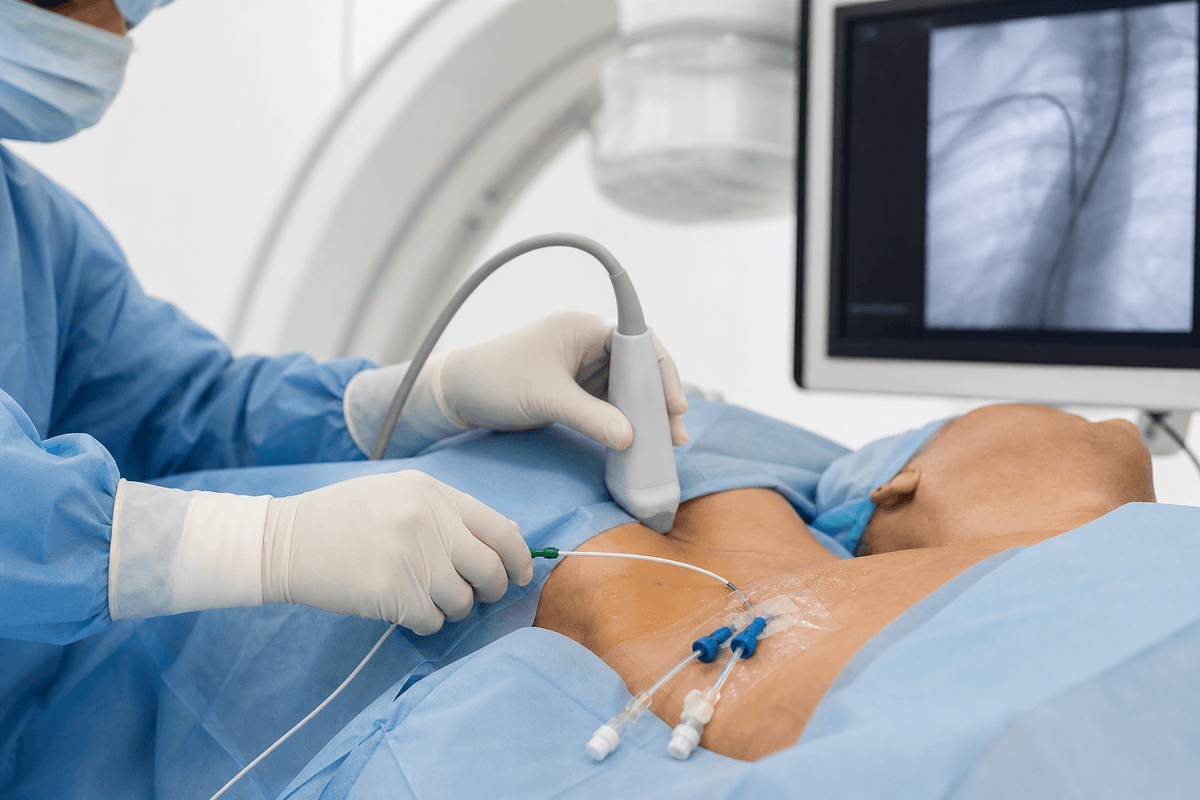
Using ultrasound guidance, the nephrologist identifies the target vein and carefully inserts a needle to establish initial access to the central venous system.
A subcutaneous tunnel is created under the skin from the vein entry point to an exit site on the chest wall, allowing the catheter to be secured and reducing infection risk.
The tunneled dialysis catheter is advanced through the tunnel and positioned in the superior vena cava or right atrium, with fluoroscopy or X-ray confirmation of proper placement.
The catheter is secured at the exit site, tested for blood flow in both lumens, and dressed with sterile bandages to ensure optimal function and minimize complications.
A structured, patient-first approach from first consultation to full recovery.
Dr Sriharsha Gurram conducts thorough evaluation including vascular mapping, review of dialysis needs, assessment of previous access history, and patient education about the procedure and post-insertion care.
Dr Gurram utilizes advanced ultrasound and fluoroscopic guidance throughout the procedure to ensure accurate vein cannulation, optimal catheter positioning, and minimize complications with real-time visualization.
Strict aseptic protocols are followed during catheter insertion, including comprehensive skin preparation, sterile draping, and antimicrobial prophylaxis to reduce infection risk and ensure patient safety.
Dr Sriharsha Gurram provides detailed catheter care instructions, schedules regular follow-up appointments to monitor catheter function, and remains available for any concerns or complications that may arise.
What to expect at each stage of your recovery journey.
Patient is monitored for 2-4 hours after insertion to check vital signs, ensure hemostasis at the insertion site, and confirm proper catheter function. Chest X-ray is performed to verify catheter position and rule out pneumothorax.
Patient may experience mild discomfort at the exit site and tunnel area. The catheter can be used immediately for dialysis if needed. Patients should avoid strenuous activity and keep the exit site clean and dry with prescribed dressing changes.
Regular catheter care includes sterile dressing changes, cap changes, and catheter lock solutions to prevent infection and thrombosis. Patients should monitor for signs of infection and attend scheduled follow-ups with Dr Gurram for catheter assessment and maintenance.
The tunneled catheter provides reliable vascular access for hemodialysis treatment immediately or within 24 hours of insertion, allowing patients to receive necessary renal replacement therapy without delay.
The subcutaneous tunnel creates a barrier that significantly reduces the risk of catheter-related bloodstream infections compared to non-tunneled catheters, with proper care and maintenance protocols.
Patients experience consistent and effective dialysis treatments through a secure access point, leading to better fluid management, toxin removal, and overall well-being during their kidney disease management.
The tunneled catheter serves as a reliable temporary solution while patients await arteriovenous fistula maturation or kidney transplantation, ensuring continuity of dialysis care throughout their treatment journey.
Let's clear up some of the most common myths about tunneled catheter insertion.
Get a personalised assessment from an experienced specialist. Understand your options, ask your questions, and decide with confidence.
Consult Sriharsha Gurram for Tunneled Catheter Insertion at any of these 2 centres — pick the one nearest you.