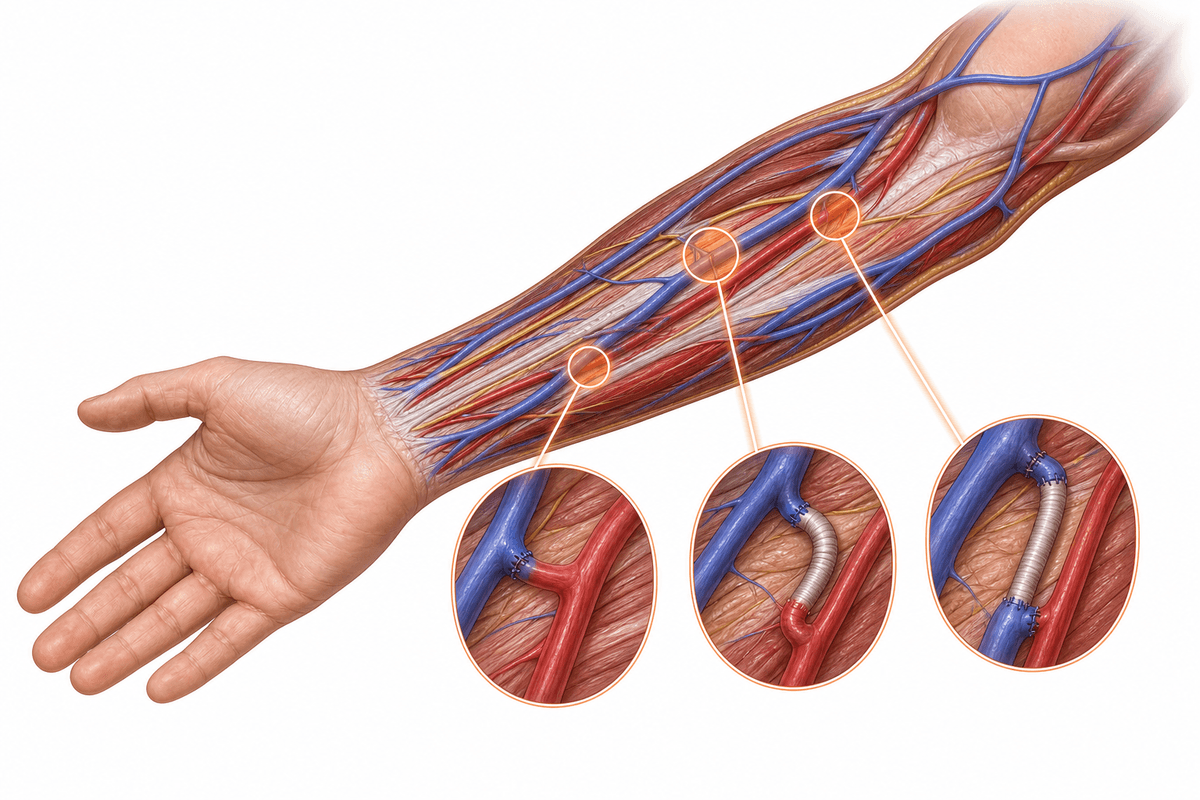
Performed by Dr. Sriharsha Gurram at Dr Sriharsha Gurram
Vascular Access Planning in Bengaluru is a comprehensive pre-procedural evaluation performed by nephrologists to determine the best location and type of vascular access for hemodialysis patients. This non-invasive assessment uses advanced imaging techniques including ultrasound and venography to map blood vessels, assess vessel quality, and plan the optimal access site for arteriovenous fistulas or grafts. Dr Sriharsha Gurram provides expert vascular access planning to ensure optimal outcomes for chronic kidney disease patients requiring long-term dialysis.
We believe in honest, upfront disclosure so you can make an informed decision.
A step-by-step look at what happens during this procedure.
The nephrologist performs a thorough physical examination of both arms, checking pulse quality, assessing veins for size and continuity, and evaluating any previous access sites or surgical scars that may affect planning.
High-resolution duplex ultrasound is used to visualize and measure arterial and venous anatomy, assess vessel diameter, depth, wall quality, and blood flow characteristics. This imaging identifies the optimal vessels for fistula or graft creation.
In cases where central vein stenosis or occlusion is suspected based on clinical signs or previous central catheter use, venography may be performed to assess central venous patency from subclavian to superior vena cava.
The nephrologist analyzes all collected data including vessel diameters, flow rates, depth from skin surface, and presence of any anatomical variations or pathology that could affect access creation and maturation.
Based on comprehensive assessment, a detailed recommendation is made regarding the optimal access type (arteriovenous fistula vs. graft), specific location (radiocephalic, brachiocephalic, brachiobasilic), and timing for surgical creation.
A structured, patient-first approach from first consultation to full recovery.
Dr Sriharsha Gurram conducts detailed patient history review including diabetes status, cardiovascular disease, previous access attempts, and hand dominance to personalize the vascular access plan for optimal long-term function.
Using state-of-the-art duplex ultrasound technology, Dr Gurram performs bilateral upper extremity vascular mapping following established guidelines, measuring vessel diameters, assessing compressibility, and evaluating flow dynamics to ensure accurate vessel characterization.
Dr Sriharsha Gurram collaborates closely with vascular surgeons, sharing detailed mapping results and clinical considerations to facilitate optimal surgical planning and timing for access creation based on the patient's renal function trajectory.
Dr Gurram provides comprehensive counseling about the recommended access type, expected maturation timeline, vessel preservation strategies, and schedules appropriate follow-up to monitor renal function and coordinate timely access surgery before dialysis urgency.
What to expect at each stage of your recovery journey.
Patients can resume normal activities immediately after the vascular mapping procedure. There are no activity restrictions, and patients can return to work or daily routines the same day. Ultrasound gel is cleaned off, and no wound care is needed.
During the period between assessment and access creation, patients should focus on vessel preservation by avoiding blood pressure measurements, venipuncture, and intravenous lines in the planned access arm. Hand exercises may be recommended to promote vein dilation.
Once surgical timing is determined based on declining kidney function, patients work with the care team to optimize nutritional status, manage anemia, control blood pressure, and ensure appropriate pre-operative evaluation is completed for successful access creation and maturation.
Comprehensive vascular mapping enables selection of the most suitable vessels for access creation, following the 'fistula first' principle while respecting individual anatomical variations, increasing the likelihood of successful maturation and long-term patency.
Pre-procedural planning identifies unsuitable vessels, central venous stenosis, and anatomical challenges before surgery, allowing surgeons to avoid high-risk sites and significantly reducing rates of primary access failure, steal syndrome, and early thrombosis.
Strategic planning with adequate lead time (typically 6 months before anticipated dialysis) allows for native fistula creation and proper maturation, avoiding emergency catheter placement and its associated infection risks and complications.
Appropriately planned vascular access based on detailed mapping demonstrates superior long-term patency rates, fewer interventions, reduced hospitalization for access-related complications, and better quality of life for dialysis patients.
Let's clear up some of the most common myths about vascular access planning.
Get a personalised assessment from an experienced specialist. Understand your options, ask your questions, and decide with confidence.
Consult Sriharsha Gurram for Vascular Access Planning at any of these 2 centres — pick the one nearest you.